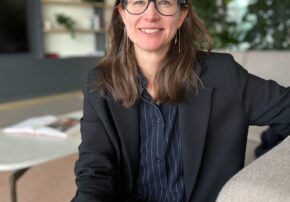


Winy Maas is the “M” of MVRDV, which he co-founded and where he serves as Principal Architect. Born in Schijndel in 1959, he has shaped the office’s work across every typology and scale, from Villa VPRO in Hilversum and WoZoCo in Amsterdam to Rotterdam’s Markthal and the Depot Boijmans Van Beuningen, the first publicly accessible art depot in the world. In 2008 he established The Why Factory, a think tank at TU Delft, where he also holds a professorship. He sits on the Spatial Quality Boards of Rotterdam, Eindhoven and Barcelona.
Scarcity has long been part of MVRDV’s working conditions: little space, little budget, many constraints. Today it is structural. Construction costs have exploded, supply chains break, municipal coffers are empty. In the interview ahead of his keynote at the Best of Architecture Summit 2026, Winy Maas explains where innovation still happens under these conditions, what architects can do with existing buildings, and why he believes in testing new combinations of uses.

MVRDV has spent decades practicing with scarcity: little space, little budget, many constraints. How does that practice change when scarcity is no longer temporary but structural: exploded construction costs, breaking supply chains, empty municipal coffers?
W. Maas: “There is always a margin, even with a limited budget. In that margin is where innovation should happen. In the first weeks of a project, you have to find the soul of your project – the fresh idea that your design brings. Once you have that, you defend it. Everything around it can be questioned or adapted, but that core must remain.”
You’ve often said that architecture must take a stance, not just deliver solutions. When municipalities no longer have the funds for schools and community centres – where is the line between what architects can demand, and what they must change themselves?
W. Maas: “Even with limited budgets, a lot is still possible. In our design for the Gymnasium Beekvliet, we largely worked with the existing school, extending its life while adding new spaces and making the history visible. Constraints can force us to be more explicate about what really matters, without giving up ambition.”
The office market is collapsing across Europe while housing remains scarce. MVRDV responded early to this shift with adaptive reuse projects. Is repurposing existing structures the real architectural task of the coming decade and more important than any new build?
W. Maas: “It is a major task indeed, but it cannot be the only one. We should reuse what we can, while recognising that existing buildings only will not be enough. Tripolis Park shows this combination: Aldo van Eyck’s existing buildings were preserved and adapted, while a new building was added to meet current requirements and increase density. The future needs both transformation and new construction.”
Who can afford good spaces and who cannot is becoming the central social question. With the Markthal in Rotterdam, MVRDV created a building where private housing, a public market, food culture and urban life are combined in one structure. Can this model offer lessons for European cities facing inequality and pressure on urban space?
W. Maas: “Yes, the Markthal was a test of how different programmes can help one another and share limited space. We need many more tests like that. Instead of separating housing, commerce, culture, and public life, we should keep exploring how they can create more value together.”
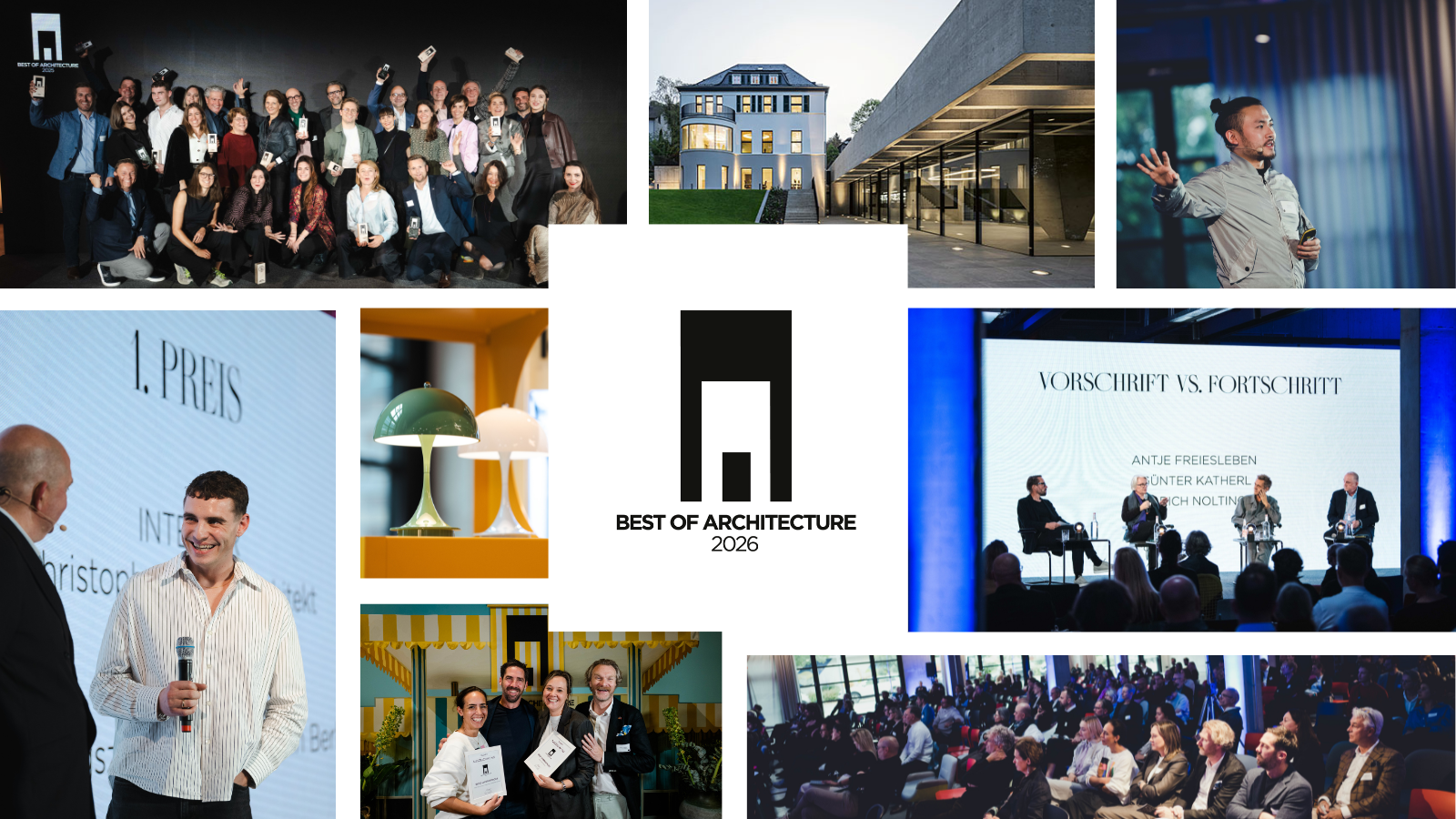
Winy Maas gives the keynote (From Scarcity to Creativity: Architecture Beyond Fear) at the Best of Architecture Summit 2026 on 22 October at Design Offices Macherei in Munich: Tickets.
 IN DEN WARENKORB